
nomadic consciousness
the mixing and mingling of who I am

What’s a piece of writing that you find yourself returning to? Or perhaps turning to, in those periods when you feel at a loss; untethered and reaching?
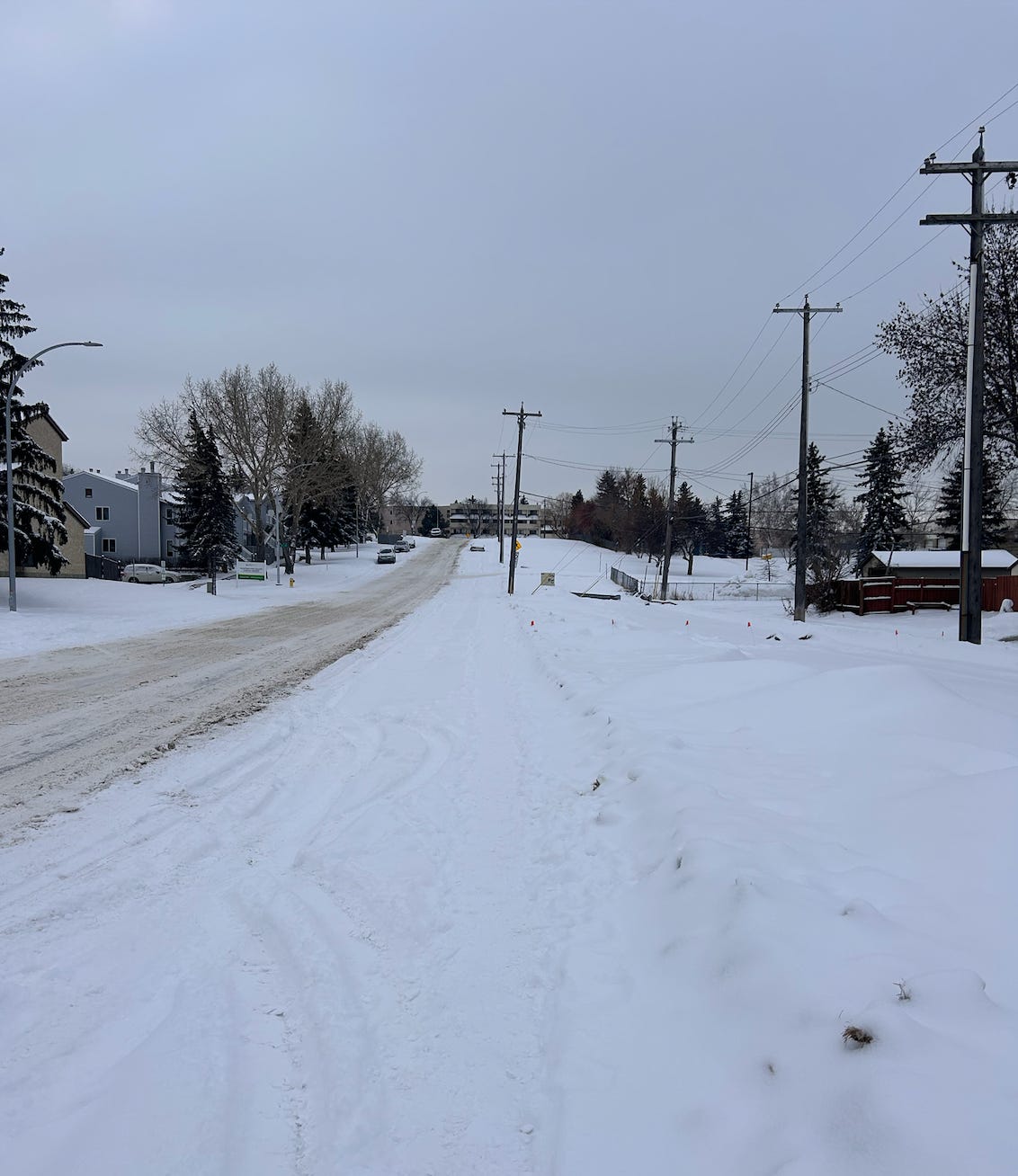
As I write today from the snowy, flat, and sprawling city of Edmonton, my hometown, I find myself reflecting on borders. A few days ago, I sat in the Italian Centre café with two of my oldest friends. None of us live in Edmonton anymore, but we find ourselves back in its blistering weather around this time of year. All of our parents are getting older, and even though over time our ties to this place become more and more tenuous, there are these reasons that draw us back, reasons we leave tracks across different landscapes and retrace them again.
“I clear a path to retrace my steps” (Sandeep Parmar & Bhanu Kapil).
Sara Ahmed writes about how a nation is a constructed familiar space – and of course it is. And I’ve been crosshatched with familiarities and unfamiliarities over my lifetime. With each year away, and with every short return, I become more keenly aware of the mixing and mingling of who I am. There are parts of my “Canadian” identity that have frayed at the edges or otherwise unravelled to become entwined with my identity in Scotland. In Ban en Banlieue, Bhanu Kapil reflects on the immigrant versus the monster, and as I collect the fibres of different places, my mind crammed with knowledges and discrepancies, I increasingly feel strung in between them, these identities that mirror one another but depend largely on the gaze placed upon them.
In the UK, I am becoming more monstrous over time. I collect the organic and inorganic materials, the “repurposed teeth, selenium, lungs, pink lightning, public health concerns” (Kapil) and feel my skin, my body, my energy, my outlook, twist into something less palatable. How far can an immigrant slip away from the status quo before they cross the threshold? Into a sore place of discomfort, into a country’s wound, into a monster? How long before even the people I love find it hard to look at me and the residue I leave behind?
The writing that I return, turn, to when I feel unmoored, and distressed about feeling unmoored (because I don’t always feel distressed about it), is the essay “Lyric Violence, the Nomadic Subject and the Fourth Space.” Parmar writes that in returning to England, she transformed into a “curio of voice, an embodied other, vitrined like an artefact.” In many ways, the UK, post-imperial Britain, feels markedly different than my hometown, the country I was born in. And I fear I did too well, in my early years here, to acclimate to its particular brand of whiteness. To its close-lipped silence and suspiciousness. To a person who succeeded at becoming and “belonging” when to become/belong here meant following contortions as dictated by an oppressive narrative.
In a recent poem, written for the remarkable Disrupting the Narrative project led by Hannah Lavery, I conceded –
And I admit
it is not radical enoughto become an agent
of change limited by the borders
of a white imagination.
I wonder where that leaves me, us, the immigrants, the monsters, the hybrids, who will always be left at the front lines of change – especially that which is decolonial. It leaves me at a place where in this newsletter post, I set up to reflect on the end of the year, but instead find my mind swimming with thoughts of borders and thresholds, of what it means to write poetry as an “embodied other” in a period of rising fascism and right-wing governments. I find my nomadic consciousness spinning like a broken compass, unable to grip the familiarity of any country. Because Canada, too, is only a version of what I knew for the first twenty years of my life. And I don’t feel “normal” in Scotland anymore because I don’t feel like I fit into its mainstream narratives. Though again, I ask, why should we want to?
For this newsletter, I set out wanting to reflect that in 2024, I submitted the least I’ve ever submitted, I published the least I’ve ever published, I succeeded the least I’ve ever succeeded in the eyes of this industry. I was heartbroken and for weeks at a time, I found myself unable to leave bed or get dressed. I cried in the shower and I cried at every single event I read at (I’m sorry if you were there and witnessed that). For months at a time, I refused to touch my manuscripts, overcome with distrust of my own topic of nature writing, which I felt I was articulating in a way meant to satisfy the white, Western, gaze that loved to read about a brown body but refused to save it. The blank page stayed blank unless I was writing copy for the various collectives I organise with, or unless I was writing about Gaza, like my reflection on Fady Joudah’s […] in Wasafiri.
But, outside of the industry, I feel like it was a year of accomplishment: I dug out the hard calcifications of assimilation from my body and started to address my own complicity, my own desires to be rooted within the establishment more genuinely. This will never be something I can “complete” because I am, after all, a product of the establishment, of Western society, and of new privileges I straddle as someone who grew up working class but now possesses so much cultural capital. I won’t be able to give up everything, and there are things I could give up that I still haven’t. My mindset is a work-in-progress.
But in terms of my accomplishments, I built new relationships and firmed up the old, finding solace in people with whom I could pick apart the tangles of our complicity. People whose first words when we met up for coffee were about Palestine. People who called me on the phone so we could talk about creeping feelings of censorship in our places of work. People who fundraised for families in Gaza, for asylum seekers, for houseless people, for trans lives. People who helped me learn about climate justice from an action-oriented position. People who taught me that the billionaire company on which the arts industry in the UK relied on was, for much of the time I benefited from its money, an active investor in the East African Crude Oil Pipeline. It still hurts me to think about how I read about Tanzania on those stages, under the impression I was bridging places, my homelands, together when really, I was an agent in breaking them apart.
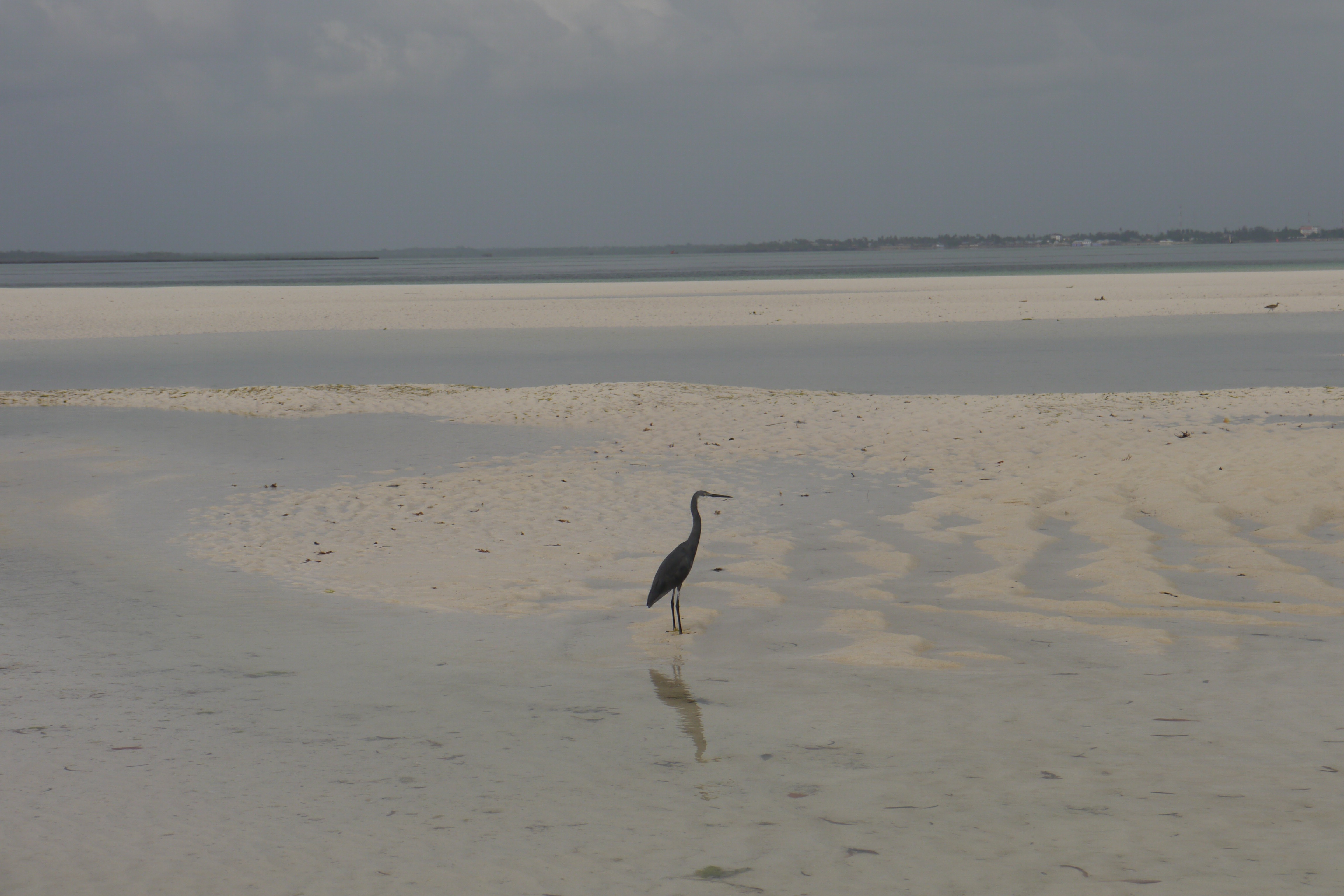
So how am I ending 2024? I did read beautiful, transformative work, and this newsletter does track some of that in its older posts. I found my capacity for care grow, because I made so many new friendships. I learned more about what activism looks like outside of passive artmaking. I held my partner close. I opened up about my hurt, family traumas I normally keep enclaved. I filled notebooks with shapeless writing meant only for myself and no one’s gaze. I set forward the first steps toward being a person I, myself, can truly love.
This was so good to read, especially now at this weird ‘festive’ time, thank you x
‘I set forward the first steps toward being a person I, myself, can truly love.’ What an accomplishment, Alycia and such beautiful words as always 💙